Things to See & Do in Kentucky
SOS Children's Villages - USA Family Dinner Time Art Contest
The Family Dinner Time Art Contest celebrates family dinner time and kicks off on Thanksgiving each year. Children may submit artwork of their family at dinner time to win a home computer. Artwork can be in any form, but must illustrate a family eating together. For sculptures and other difficult-to-ship items, please send a photo as opposed to the actual artwork.
A winner will be selected from each age group: preschool ages 1-7; grade school ages 8-12; and high school ages 13 -17.
Shankar's International Children's Competition (SICC)
K. Shankar Pillai (July 31, 1902–December 26, 1989) was a famous cartoonist. He brought out a political magazine called ‘Shankar’s Weekly’. Under the auspices of this magazine, a competition called the Shankar’s International Children’s Competition was organized in 1949. It invited paintings and writings from children in India. Children sent about 3,000 entries. The following year the competition was thrown open to children from all over the world.
Today, the competition has grown and about 1,60,000 entries are received from over 130 countries. The entries are judged by an international jury. The prizewinning entries are compiled in a volume called the ‘Shankar’s Children’s Art Number’. The competition is open to children all over the world below the age of 16 years. There is no entry fee and competitors are free to choose the theme/subject they are interested in, or like most, for their paintings/ drawings/writings.
Teaching Tips & Ideas
How I Teach a Large Family in a Relaxed, Classical Way: Fine Arts
Ideas for incorporating fine art education into a large homeschool family curriculum.
Masterpiece Art Instruction
Masterpiece Art Instruction offers a free newsletter, "Teach Art at Home," along with free projects and lessons, art instruction CDs, and more
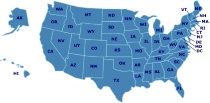
Looking for Another State?
Featured Resources
As an Amazon Associate, we earn from qualifying purchases. We get commissions for purchases made through links on this site.
A Child's Story of America
This text reads like a story book more than a history textbook. This book has a decidedly Christian bent. Students are given a comprehensive overview of U.S. history from Columbus to the present. Review questions are included throughout, as well as helpful maps. The text contains numerous pictures and large print. An optional test packet and answer key is available.

Understanding Waldorf Education : Teaching from the Inside Out
Written by a teacher with more than 25 years of experience, this book offers a jargon-free view of Waldorf schools with their philosophy of the importance of a three-dimensional education. Through learning experiences that involve all of the senses, children use a variety of intelligences to develop thought, feeling, and intentional, purposeful activity. Whether you_re a Waldorf parent or teacher, or you just want to learn more about these innovative educational concepts, this book contains impo...
Alpha-Phonics
Alpha Phonics is a primer for beginning readers. It features 128 self-explanatory lessons, printed in large, clear calligraphy suitable for beginning readers. You'll find product information about Alpha-Phonics here.

Maria Montessori: Her Life and Work
Maria Montessori is important background reading for parents considering Montessori education for their children, as well as for those training to become Montessori teachers. The first woman to win a degree as a Doctor of Medicine in Italy in 1896, Maria Montessori's mission to improve children's education began in the slums of Rome in 1907, and continued throughout her lifetime. Her insights into the minds of children led her to develop prepared environments and other tools and devices that ha...

The Complete Home Learning Source Book : The Essential Resource Guide for Homeschoolers, Parents, and Educators Covering Every Subject from Arithmetic to Zoology
This ambitious reference guide lives up to its name. Practically three inches thick--and we're not talking large print here--it's packed with titles, ordering information, and Web site addresses. From where to send away for a kit to make your own Chilean rain stick to how to order a set of Elizabethan costume paper dolls, the book connects families to a world of learning possibilities. Book titles, short synopses, authors' names, publishers, and years of print make up the bulk of the guide. Clas...